Kitchen problem solver
Why your frozen smoothies stay chunky and the counter fix that finally makes them smooth
If your blender leaves strawberry pieces, gritty ice, dry protein powder, or a frozen lump spinning above the blades, the problem is usually not your recipe. It is the way frozen ingredients move, or fail to move, inside the pitcher.

Quick Answer
Frozen smoothies turn chunky when frozen fruit, ice, powder, and greens stop circulating around the blades. The fix is a better ingredient order, enough liquid, smaller frozen pieces, and a blender setup with strong ice-crushing power and a pitcher that keeps dense ingredients moving.
The real-life scenario
It usually happens on a morning that is already running late.
You toss in frozen strawberries, half a banana, a scoop of protein powder, maybe spinach because you are trying to be decent to your future self. The blender roars for ten seconds. The bottom turns pink. The top sits there like a frozen traffic jam.
You stop it. Shake the pitcher. Add more almond milk. Blend again. Now the smoothie is thinner than you wanted, but somehow there are still little frozen bits at the bottom of the glass.
For small apartments, busy households, and budget-conscious families, this is not a cute inconvenience. Frozen fruit is supposed to save money. Homemade smoothies are supposed to replace the $8 drink shop habit. If every blend turns into a cleanup-heavy science project, the freezer bag eventually stays unopened.
The same thing shows up with frozen margaritas, slushies, smoothie bowls, protein shakes, and leftover fruit that you froze before it went bad. The goal is simple: make frozen ingredients smooth without stopping five times or watering the whole thing down.
Why the problem happens
A blender does not simply chop food. It needs a moving vortex. Liquid pulls ingredients down, blades cut them, and the mixture circulates back up. When that movement breaks, frozen fruit and ice sit above the blade zone.
Dense ingredients make the problem worse. Frozen mango cubes, whole strawberries, ice, thick yogurt, peanut butter, and protein powder can turn into a packed layer. The motor may still sound busy, but inside the jar, nothing useful is happening.
This is why a smoothie can be watery and chunky at the same time. The liquid blends at the bottom while the frozen pieces avoid the blades. Annoying, yes. Also fixable.

Common mistakes that keep smoothies chunky
These little habits are easy to miss because they seem harmless. In a real kitchen, though, they can decide whether breakfast takes two minutes or turns into a sink full of sticky parts.
- Putting frozen fruit in first: Heavy frozen pieces can trap the blades before the liquid gets moving.
- Using huge frozen chunks: Large strawberries and mango cubes need more force and more space to circulate.
- Adding powder against the wall: Protein powder can stick to the pitcher and leave dry streaks.
- Overfilling the jar: A full pitcher leaves less room for ingredients to fall back toward the blade path.
- Adding too much liquid too late: You may thin the smoothie without solving the frozen layer sitting above the blades.
- Expecting a small personal blender to do family-size work: Compact machines can be handy, but repeated frozen batches test their limits.
What actually works
The fix starts with technique. Even a stronger blender performs better when the ingredients are loaded in a smarter order.
1. Liquid first
Add milk, juice, water, or coconut water before frozen ingredients. Liquid at the bottom helps the blades create motion instead of grinding against air pockets.
2. Soft foods next
Banana, yogurt, fresh fruit, or greens should go in before hard frozen items. They bridge the gap between liquid and ice.
3. Frozen last
Ice and frozen fruit can go on top, where gravity helps feed them down as the mixture starts moving.
For frozen fruit smoothies without chunks, cut large fruit before freezing when possible. Let rock-hard fruit sit on the counter for three to five minutes if your kitchen is not too warm. Use pulse first when the mixture is dense. Then move to a longer blend once the ingredients begin circulating.
For crushed ice drinks, do not start with a dry mountain of ice. Add the liquid base first. A little liquid helps the ice move toward the blades instead of bouncing around the top.

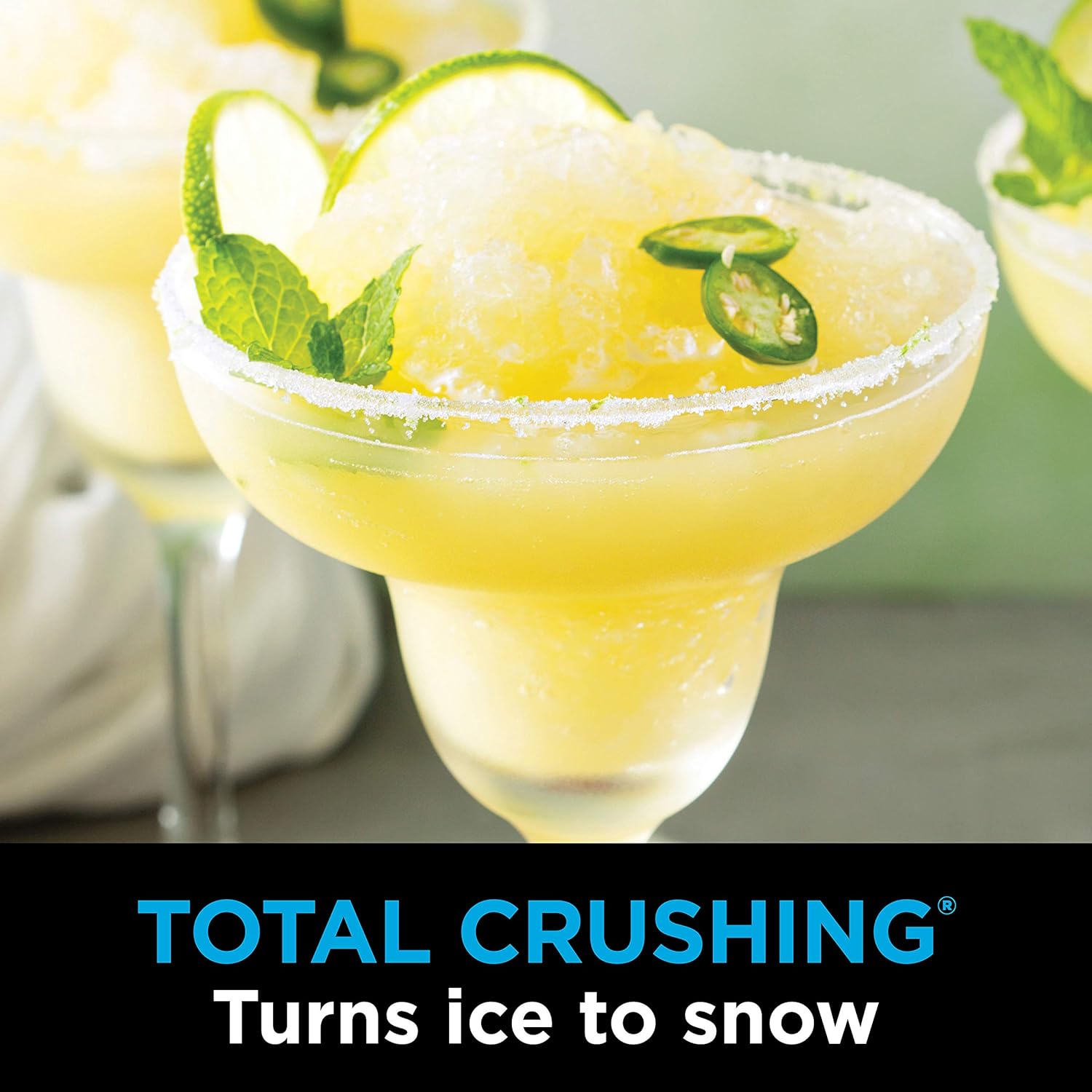
Where a stronger countertop setup starts to make sense
Technique helps, but there is a point where the machine matters. If you make frozen smoothies every day, blend for two or more people, crush ice for drinks, or use frozen fruit to keep grocery costs down, a small low-power blender can become the bottleneck.
This is where a full-size ice-crushing blender earns attention. The Ninja Professional Plus Blender BN701 fits naturally into this problem because it is built around the jobs that cause the most friction: frozen fruit, ice, thicker drinks, and bigger batches.
The useful part is not a long list of numbers. It is the combination of a large pitcher, a stacked blade, preset blending patterns, manual speeds, and enough power for dense frozen ingredients. Those details matter when someone wants three smoothies before school, or when a small apartment kitchen has room for one serious countertop appliance instead of three half-useful ones.

Why this solution works
A stacked blade gives frozen ingredients more contact points through the pitcher. That is helpful with berries, ice, and thick drink bases because the cutting action is not limited to the very bottom.
Timed blending patterns can also help. Frozen drinks often need short bursts, pauses, and stronger runs. The pause matters because ingredients fall back into place. It sounds minor until you have stood there tapping the side of a blender with a spatula before work.
The larger pitcher helps with batch blending. For a family or roommate kitchen, making one big round of smoothies is easier than running several small cups. It also helps with salsa, frozen lemonade, and weekend drinks when one serving is not the point.
Real use cases
The best kitchen fixes are the ones you actually repeat. Not the complicated routine you do once on a Sunday when everything is calm. The real test is Tuesday morning, a tiny counter, and five minutes before someone has to leave.
Weekday breakfast rush
Frozen berries, banana, yogurt, and milk can turn into several smoothies without splitting the recipe into small batches.
Small apartment entertaining
Frozen drinks and crushed ice can happen without a separate ice machine or a pile of bar tools taking over the counter.
Budget freezer planning
Frozen fruit bags become more useful when the blender can handle them without leaving icy chunks in every cup.
Lazy dinner add-ons
Pulse tomatoes, onion, lime, and cilantro for quick salsa when tacos, chips, or leftover chicken need help.
Post-workout shakes
Liquid first, powder second, frozen fruit last keeps protein powder from clumping into dry streaks.
Summer kid snacks
Fruit, ice, and juice can become slush-style drinks without buying another box of frozen treats.


Before vs After
| Before | After |
|---|---|
| Frozen strawberries sit on top while liquid spins below. | Liquid-first loading and stronger circulation pull fruit into the blend path. |
| Ice drinks have large crunchy pieces and watery edges. | Pulse control and ice-crushing power create a more even frozen texture. |
| Protein powder sticks to the jar wall. | Powder goes in after liquid, so it hydrates before frozen ingredients tighten the mixture. |
| Family smoothies require several small batches. | A full-size pitcher makes multiple servings in one round. |
| Cleanup feels like a punishment. | Rinsing right away and using dishwasher-safe parts lowers the friction after blending. |

Who this is NOT for
This kind of setup is not ideal for everyone. If you only make one small banana smoothie once a week, a full-size countertop blender may feel like too much appliance. If your kitchen has almost no cabinet space, measure first. Counter space is emotional real estate in a tiny kitchen.
It may also be a poor fit if you need very quiet early-morning blending. Crushing ice and frozen fruit takes force, and force usually makes noise. If someone is sleeping ten feet away in a studio apartment, timing matters.
When this will not work: overloaded pitchers, too little liquid, giant frozen blocks, or thick mixtures packed down tightly can still cause trouble. A better blender helps, but it cannot fix every loading mistake. The simple method still counts.
FAQ
Why is my smoothie chunky even after blending?
The ingredients may not be circulating. Frozen fruit and ice can sit above the blades while liquid blends below. Try liquid first, softer ingredients next, and frozen items last.
How do you make frozen smoothies smooth?
Use enough liquid, avoid overfilling, cut large frozen fruit pieces, pulse first, and blend long enough once the mixture starts moving. A stronger countertop blender helps with daily frozen blends.
Why does protein powder clump in smoothies?
Powder clumps when it stays dry against the pitcher or gets trapped between frozen ingredients. Add liquid before powder, then add fruit and ice after.
Can you crush ice and frozen fruit together?
Yes, but add liquid first and leave enough room in the pitcher. Ice and frozen fruit need space to fall into the blades instead of locking together.
Is a large pitcher better for family smoothies?
Usually, yes. A larger pitcher can save time when making multiple servings, though it takes more storage space than a personal blender cup.
Related solutions
For more practical home and kitchen buying help, browse Marveluga collections, visit the Marveluga buying guides hub, or start from Marveluga home.
Final CTA
If chunky frozen smoothies, gritty ice drinks, and repeat batches are the problems you are trying to stop, the easiest relief is a stronger full-size blending setup paired with the right loading method. Check the current Amazon page, confirm the size works for your kitchen, and decide from there.
Disclaimer
Marveluga may earn a commission from qualifying purchases made through affiliate links, including Amazon links. Product availability, pricing, ratings, and seller details can change. Always confirm current information on the retailer page before buying.